


2025-03-03
Heat dissipation structure is an important part of UVC LED
Heat dissipation structure is an important part of UVC LED
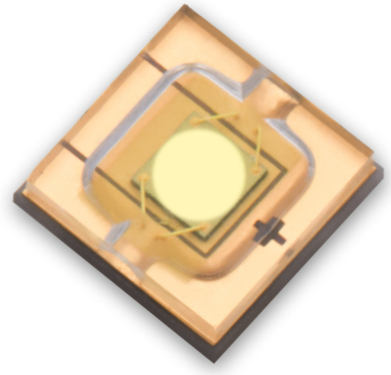
The heat dissipation structure is an important part of UVC LED, which directly affects its performance and life. The following is a detailed anatomy of the UVC LED heat dissipation structure:
1. The importance of heat dissipation structure
- Heat dissipation requirements: UVC LED work generates a lot of heat, if not timely heat dissipation, will lead to the chip temperature rise, affecting the light efficiency and life.
- Heat dissipation goal: The heat generated by the chip is rapidly transmitted to the external environment, keeping the chip within a safe temperature range.
2. Materials for heat dissipation structure
- Aluminum (Al) :
Advantages: low cost, easy processing, good thermal conductivity.
Disadvantages: Thermal conductivity is not as good as copper.
- Copper (Cu) :
Advantages: Excellent thermal conductivity, good heat dissipation effect.
Disadvantages: Higher cost, larger weight.
- Ceramic material:
Advantages: Good thermal conductivity, high temperature resistance, good insulation performance.
Disadvantages: high cost, difficult to process.
3. Design of heat dissipation structure
- Heat Sink:
Material: usually aluminum or copper.
Design: Increase heat dissipation efficiency by increasing surface area (e.g. fin design).
Installation: Usually located at the bottom of the LED package, in direct contact with the chip or substrate.
Thermal Interface Materials (TIM) :
Materials: Commonly used thermal glue, thermal paste or solder.
Function: Fill the gap between the chip and the radiator to reduce thermal resistance.
- Substrate:
Material: Commonly used ceramic substrate (such as AlN, Al₂O₃) or metal substrate (such as copper substrate).
Function: As a chip support and heat dissipation channel.
- Heat Spreader:
Material: commonly used copper or aluminum.
Function: The heat generated by the chip is evenly distributed to a larger area to improve the heat dissipation efficiency.
4. Heat dissipation process
- Welding process:
Methods: Reflow welding or hot pressure welding is commonly used.
Function: The chip is firmly fixed on the substrate to ensure good thermal contact.
- Packaging process:
Methods: Commonly used air-tight package to prevent moisture and oxygen from entering.
Process: such as vacuum package or nitrogen-filled package.
5. Heat dissipation performance optimization
- Increase surface area: Increase the heat dissipation area by designing more fins or heat dissipation holes.
- Optimize airflow: Design air ducts or use fans to increase air flow and heat dissipation.
- Heat pipe technology: The heat pipe is used to rapidly conduct heat to the remote radiator to improve heat dissipation efficiency.
In SUMMARY:
The heat dissipation structure of UVC LED includes heat sink, thermal interface material, substrate and heat sink, etc. Each part has an important impact on its heat dissipation performance. The selection and design of heat dissipation materials should consider thermal conductivity, cost and processing difficulty.
The heat dissipation structure of UVC LED includes heat sink, thermal interface material, substrate and heat sink, etc. Each part has an important impact on its heat dissipation performance. The selection and design of heat dissipation materials should consider thermal conductivity, cost and processing difficulty.
If you are not sure which LED fixture is best for your project or need help with layout configuration, contact us LIKLEIGHT, we are a professional manufacturer of LED lamps in China;we have engineers and 24 hours customer service for you.Phone:+86-755-23328395, Email :contact@like-light.com,Wechat/WhatsApp:86-132-66666-320.


