



Side-Bend LED Strip for Curved Recesses: Check the Bend Plane Before Ordering
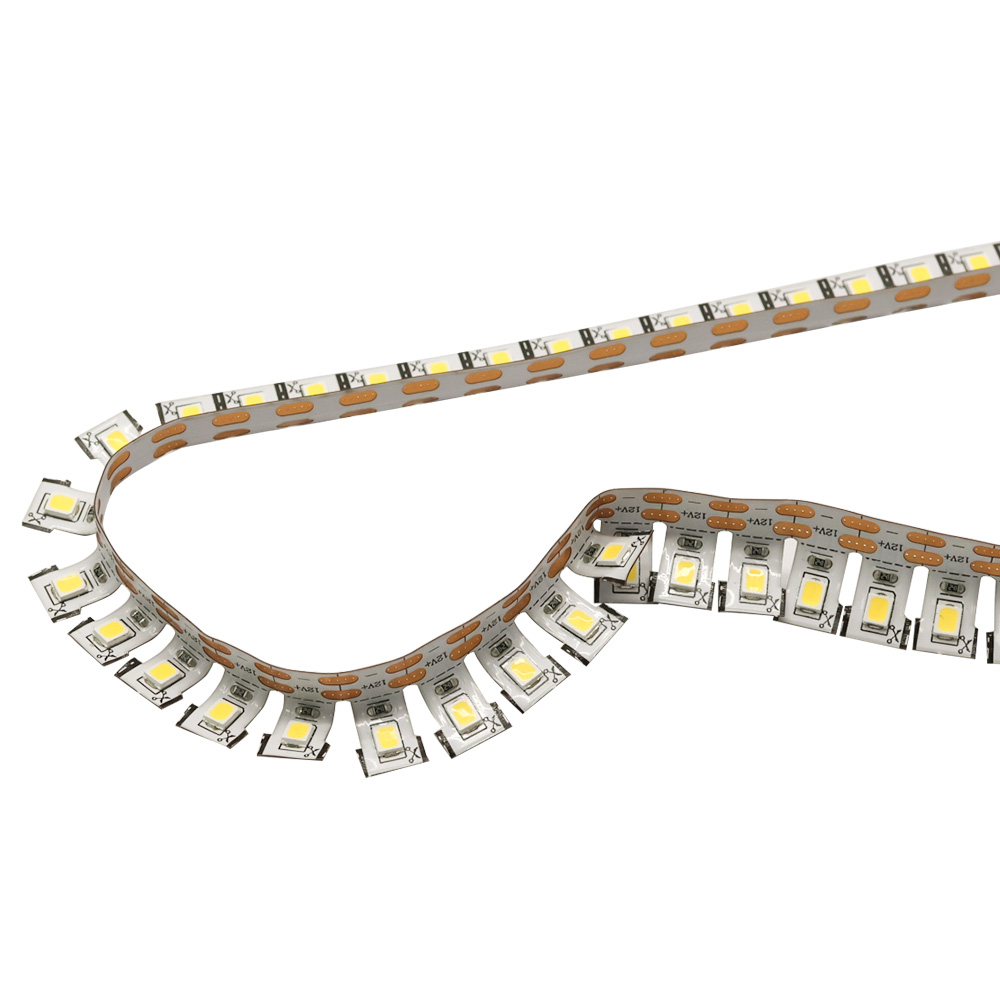
When a light line turns around a cabinet edge or enters a curved recess, the key question is not simply whether a strip bends. It is which plane it bends in and whether it sits flat on the intended mounting face. LIKELIGHT lists the L-S-2835-WZ as a 2835 side-bend strip for curved and recessed applications.
30-second selection answer
- Preferred direction: Consider a side-bend structure when the route must curve sideways in the strip’s plane. For a straight run or an ordinary up/down bend, a simpler strip may be easier to mount.
- Check three items: Show the bend plane, clear channel section and tightest curve on one drawing. LIKELIGHT says the strip bends sideways up to 90°, but does not publish a minimum bend radius.
- Quotation stop gate: Do not release a reel-length order until the exact envelope, minimum radius, cut pitch, electrical version and protection details are confirmed. Request a drawing and representative fit sample first.
Send the channel section, curve radius and finished lengths; ask LIKELIGHT to confirm the drawing and recommend a representative sample.
Separate the bend plane from the light direction
Side-bend describes sideways movement within the strip’s plane. It is not the same as side-emitting light, and it does not mean the strip can be folded freely in every direction. If the body has to twist to follow the route, the emitting face may no longer point at the intended surface.
Draw the route in plan and mark the emitting face in section. A side-bend version is the relevant comparison when the path turns laterally around a curve. If the curve rises or falls vertically, confirm that motion separately rather than assuming the same bend limit.
A 90-degree statement is not a radius specification
The LIKELIGHT page says model L-S-2835-WZ bends sideways up to 90 degrees. That describes a stated angle, not a minimum radius, repeated-flex life or permission to make a sharp fold.
Put the tightest radius and channel width/depth in the RFQ. Use the exact-version drawing or a sample on the real route to check for lifting, twist and blocked light. An angle cannot replace a radius and fit check.
Plan finished lengths around marked cut points
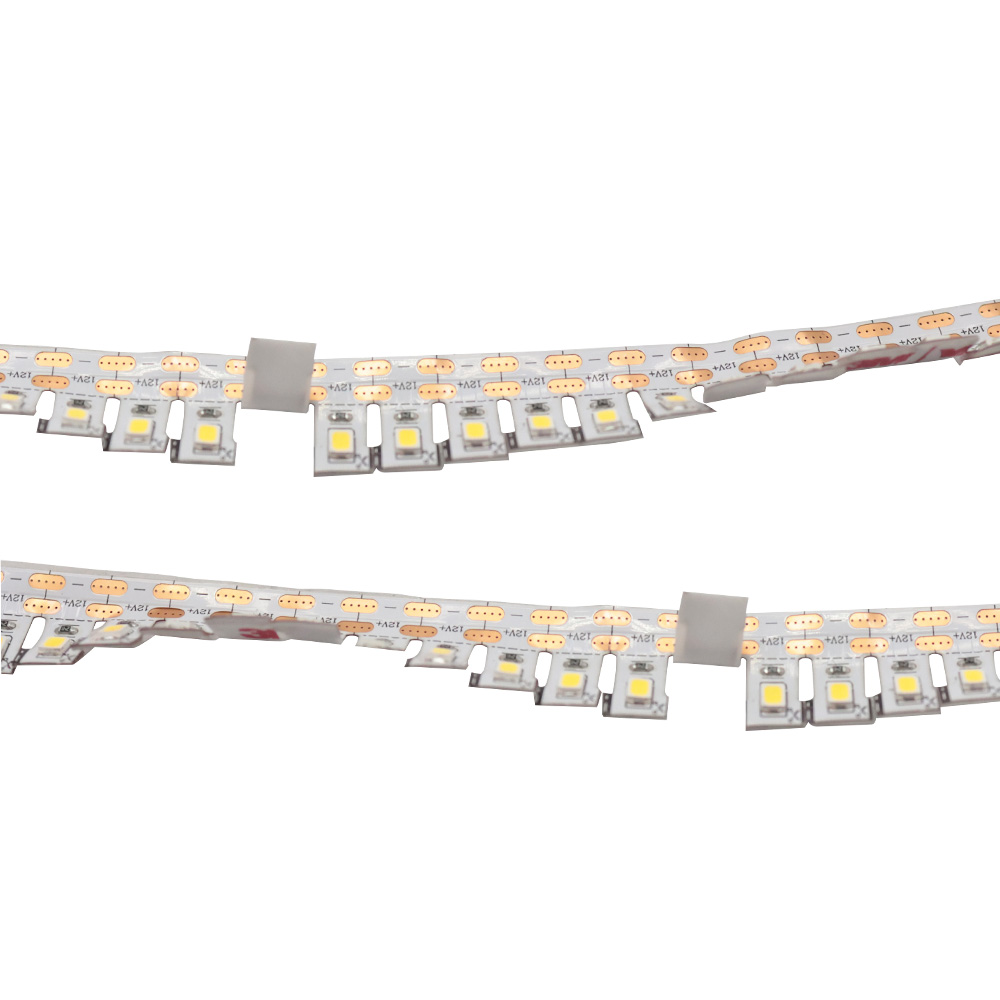
The page says to cut at marked positions and elsewhere describes individual-LED cutting. Treat the marks on the orderable version as the production reference; do not turn a general page statement into an instruction to cut at any point.
List each channel length, endpoint, corner, feed and connector position. If a cut mark falls beside a visible turn, the offcut or joint may affect the finish. Confirm the actual mark interval and end treatment on the sample.
Put electrical and environmental needs in the RFQ
The page does not publish the exact order configuration’s width/height, minimum radius, voltage, watts per metre, IP rating, cut pitch or wiring plan. These affect channel fit, supply planning, environmental suitability and service; do not borrow values from a neighboring model.
Ask the quotation to return the exact SKU/options, dimensional and bend drawing, cut interval, wiring diagram, BOM, complete-system price, sample plan, acceptance points, spares and lead time. If the installation may be damp, confirm the protection rating and joint boundary for the quoted version.
Use one section drawing for a three-step screen
If any check is open, stay at drawing and sample stage. A power calculation is omitted because the product page does not publish voltage or watts per metre for this configuration. Fit screen: clear channel width ≥ verified strip-body width + 2 × the chosen side allowance. Take body width from the exact-version drawing; set the allowance for the installation.
No dimensions or radius are invented here. Use the project CAD and measured channel as inputs; this is a decision method, not a calculation based on unpublished product dimensions.
A practical side-bend channel-fit check
-
1. Bend plane
What to inspect
Plan route and installation sectionPass condition
The curve matches the side-bend direction without twisting the strip -
2. Physical envelope
What to inspect
Clear channel width/depth, lead exit and fixing spacePass condition
The confirmed drawing fits with installation allowance -
3. Tightest curve
What to inspect
Minimum radius, corners and continuous lengthPass condition
Supplier confirms the exact model limit; a sample stays seated on the route
Conditional selection
| Project condition | Buying action |
|---|---|
| The route turns sideways in the strip plane | Include L-S-2835-WZ for comparison; request its exact bend drawing and a sample at the tightest radius. |
| The route is straight or uses an ordinary vertical bend | Compare a simpler bend structure first; lateral flexibility may add installation complexity without helping the route. |
| Radius, wet exposure or control is undecided | Pause final selection; confirm the exact electrical, IP and wiring version and test a sample. |
Product case: turn the curve into a sample acceptance route
For a counter detail that follows a rounded edge and continues into a shallow recess, L-S-2835-WZ is a relevant side-bend candidate. Send LIKELIGHT the plan route, clear section and tightest radius, request the exact dimensional/bend drawing, then fit a sample in the real channel.
Check that the strip follows the route without twisting, stays seated without blocking the light, and keeps marks and joints away from visible corners. After that, freeze the voltage, wattage, dimming/control, protection version, spares and lead time for the complete quote.
| Item | Confirmed detail |
|---|---|
| Model | L-S-2835-WZ |
| LED package | 2835 LEDs |
| Bend description | Side-bend structure, stated up to 90° |
| Cutting | Page says to cut at marked positions |
| Listed applications | Curved surfaces, cabinets, shelves, stairs and recessed lighting |
Where the L-S-2835-WZ fits—and where it does not
The page identifies L-S-2835-WZ, 2835 LEDs and a side-bend structure, and lists curved surfaces, cabinets, shelves, stairs and recessed architectural details as applications. That makes it a candidate for a continuous line that must follow a lateral curve.
Side-bend capability alone does not prove fit for every curve. For a straight run, a vertical bend or a radius tighter than the supplier confirms, compare a simpler strip/profile. Approve the sample on the actual surface and channel before bulk release.
Quotation inputs
- Exact model and optionsConfirm the orderable L-S-2835-WZ version and electrical options.
- Dimensions and bend drawingShow the envelope, bend direction, minimum radius and lead exit.
- Cutting and wiringConfirm marked interval, connections, finished sections and joint positions.
- Complete-system scopeList supply/dimming options, BOM, spares, lead time and full-system price.
- Sample and acceptanceFit the sample to the target channel and radius; record seating, face direction and joint appearance.
Attach a CAD/section, tightest radius, finished lengths, target colour and destination country. Ask for the exact-version drawing and representative sample proposal before approving the bulk quote.
Frequently asked questions
Does “up to 90°” mean any radius is acceptable?
No. The page does not state a minimum radius. Confirm the limit for the exact version and test the real curve with a sample.
Is side-bend the same as side-emitting?
No. Side-bend describes the strip’s bend plane; emission direction is a separate optical and installation question.
Can I cut at every LED?
The page refers to marked cutting positions and also uses an individual-LED cutting description. Confirm the actual mark interval on the ordered version or its formal drawing.
Copy-ready inquiry
We are evaluating LIKELIGHT L-S-2835-WZ for curved/recessed linear lighting. Attached: CAD/section and tightest radius ____; clear channel width/depth ____; finished lengths ____; destination country ____. Please return the exact orderable version, dimensional/bend drawing, cut/wiring details, electrical and IP data, complete BOM/quote, and a representative sample with acceptance steps.