


WS2813 Dual-Signal LED Strip: What Backup Data Solves—and What It Does Not
A troubleshooting and specification guide for a DC5V, 60 LEDs/m WS2813 strip, separating pixel-failure bypass from power, wiring and controller problems.
Quick answer
- Backup data improves continuity under specified pixel-path faults; it does not back up power or ground.
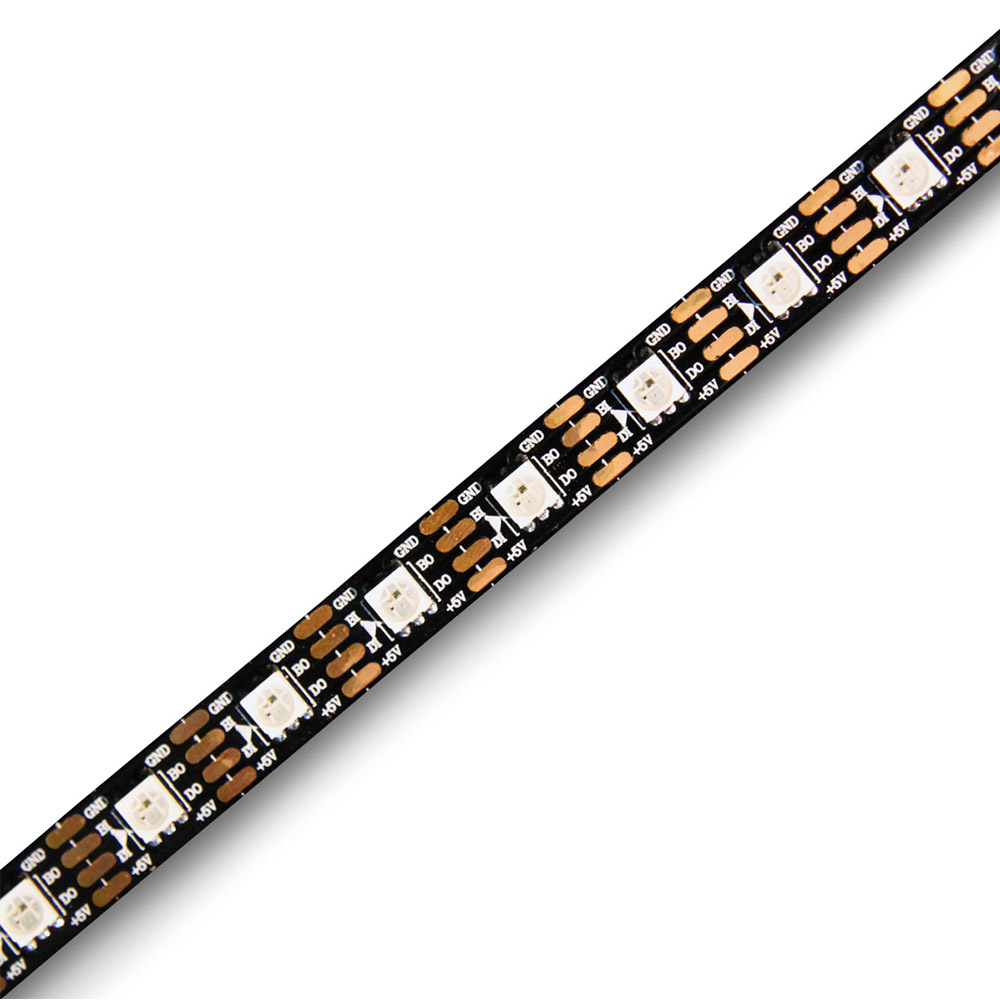
- 60 LEDs/m gives a theoretical 16.67 mm LED pitch.
- Power is not published, so measure the released strip before sizing DC5V circuits.
Published facts
| Model | L-S-WS2813-10060 |
|---|---|
| Input | DC5V |
| Control | WS2813 dual-signal cascade |
| LED system | Addressable RGB |
| Density | 60 LEDs/m |
| Viewing angle | 120 degrees |
Why backup data does not make a system failure-proof
WS2813 uses a primary and backup data path so downstream pixels may continue receiving data when the specified bypass condition is met. It does not protect against loss of DC5V, a broken ground, an incompatible controller, incorrect data direction or several faults in the wrong positions. Treat redundancy as one layer, not a complete reliability claim.
What 60 LEDs/m means for visible detail
The page identifies 60 addressable RGB LEDs per metre. The theoretical LED pitch is 1000 ÷ 60 = 16.67 mm. That can support detailed chases and gradients at suitable viewing distances, but diffuser depth, brightness, content and installation geometry still determine whether individual points remain visible.
Separate signal continuity from DC5V distribution
DC5V is published, while rated power is not. Current, cable gauge and injection points therefore cannot be calculated responsibly from this page. Divide long layouts into serviceable power zones only after measuring the released configuration, and verify loaded voltage at the end of each zone.
Commission the primary and backup paths deliberately
Before production, verify controller compatibility, colour order, data direction, primary/backup pinout and a numbered test pattern. Then interrupt one pixel path in the approved sample and document what remains operational; this tests the intended benefit without assuming that every wiring fault is bypassed.
Where LIKELIGHT L-S-WS2813-10060 fits
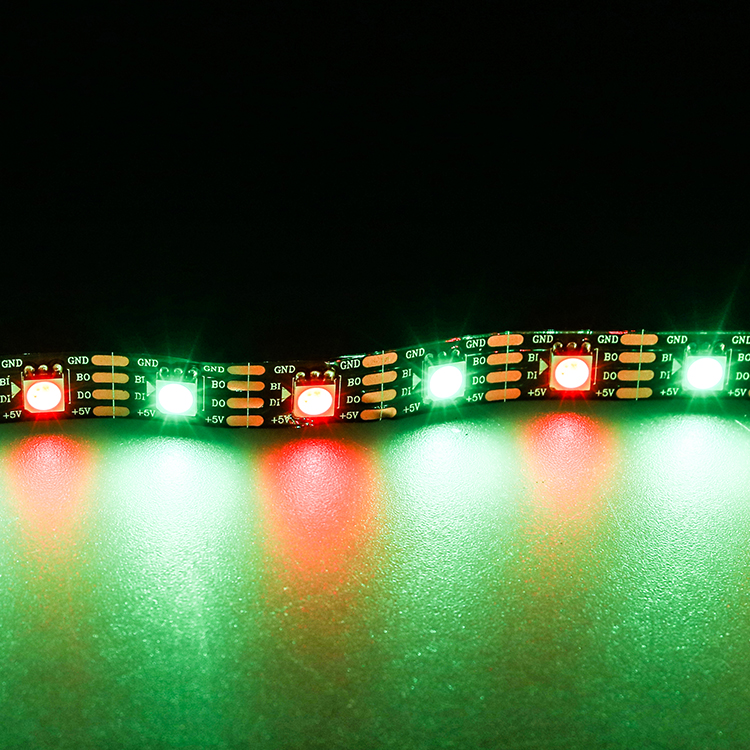
LIKELIGHT model L-S-WS2813-10060 is a candidate for signage, architectural accents and dynamic decorative lines that need addressable RGB and an added data-continuity path. Re-evaluate it when DC5V distribution cannot be zoned, the controller cannot support WS2813, or the project expects backup data to replace proper power and connector design.
Project decision table
| Condition | Decision | Reason |
|---|---|---|
| One failed pixel path | Evaluate WS2813 backup data | Test the released wiring |
| Controller mismatch | Do not expect backup recovery | Protocol compatibility is separate |
| Long DC5V layout | Create measured power zones | Power is not published |
| Close-view animation | Assess 16.67 mm pitch | Optics and content still matter |
| Wet installation | Confirm a protected version | Protection is not published |
| Bulk order | Approve a fault-injection sample | Document expected recovery |
Suitable when
- Addressable accent lines
- Projects that can test the backup path
- Layouts with planned DC5V power zones
Re-evaluate when
- Power-loss redundancy
- Unconfirmed outdoor exposure
- Controllers without WS2813 support
Information required before quotation
- Layout and zone lengths
- Closest viewing distance
- Target animation or logo
- Controller model and mapping
- Power locations and cable route
- Environment, quantity and schedule
FAQ
Does backup data keep the strip on after power loss?
No. It is a data-continuity feature, not redundant power.
Is every fault bypassed?
No. Verify the specified behaviour on the released sample.
Can current be calculated from DC5V?
No. Rated power or measured current is also required.
Is 60 LEDs/m the cutting interval?
No. Cut only at marked copper pads.


