

How Many 80mm DMX Pixels Does a Facade Need?
Turn an elevation grid into pixel quantity, a conditional DMX channel check and a complete-system RFQ.
30-second selection answer
- Preferred direction: Use an 80 mm point module when the elevation is meant to read as visible pixels and the real pitch passes a night mock-up.
- Do not use it when: The design needs a continuous wash, a close-view high-resolution image or a hidden linear source rather than visible points.
- Stop the quote when: The marked elevation, pitch, channel mode, address method, mounting detail or ordered IP version is missing.
Send the project dimensions, finished lengths, viewing distance and destination country. Ask LIKELIGHT for the exact-version BOM, representative sample and complete-system quote.
Start from the elevation grid
Mark every intended node on the elevation and assign row-column coordinates before counting products.
Quantity follows approved coordinates, while viewing distance and content decide whether the grid is visually useful.
Give each coordinate a fixture ID and service-zone ID so quantity, address, cable route and replacement location stay aligned.
Treat 80 mm as fixture size, not pixel pitch
The product diameter is 80 mm. Actual centre-to-centre pitch also includes facade geometry, brackets, cables and service clearance.
Do not place 80 mm circles edge to edge on a drawing and call that the installation pitch; approve a mounting detail and night mock-up.
Overlay the bracket and cable envelope on the facade detail before approving pitch; the luminous face is only one part of the installed footprint.
Check channels only after mode confirmation
A hypothetical 14 by 9 grid equals 126 pixels. If the delivered RGB mode uses three DMX channels per pixel, 126 x 3 = 378 channels.
That conditional count fits one 512-channel universe, but the quote must confirm channel mode, addressing method, start addresses and reserve channels before controller selection.
Leave documented address capacity for commissioning and replacement, and store the final address schedule with the as-built drawing.
Build the installed-system BOM
Compare fixtures, brackets, cables, connectors, power supplies, DMX nodes/controllers, network, enclosures, surge protection, commissioning access and spares.
The page leaves W/pc open, so fixture quantity cannot size supplies. Ask for released power and circuit schedules tied to the same address map.
Make supplier comparisons against the same drawing, test scene and acceptance sheet; otherwise a lower unit price may describe a different installed system.
Release one mapped sample zone
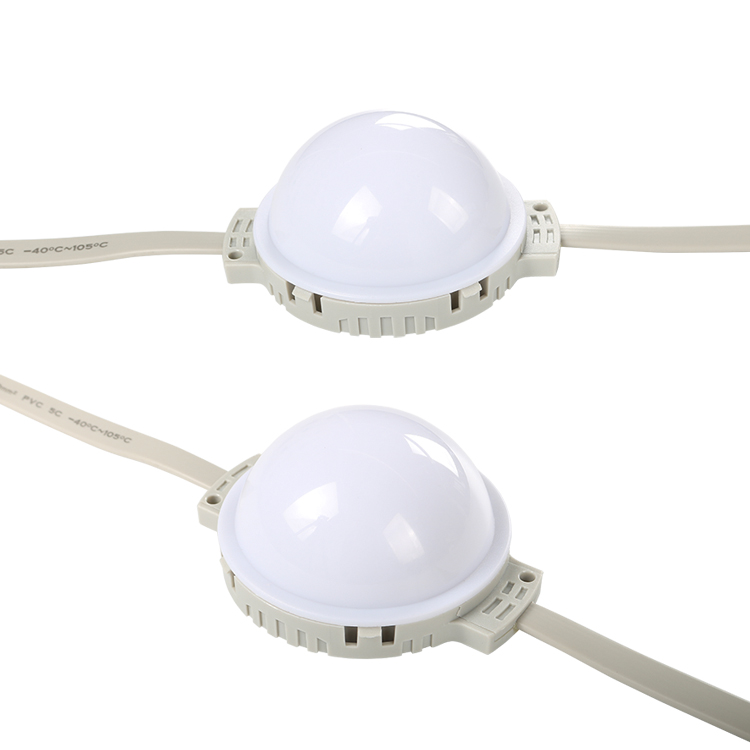
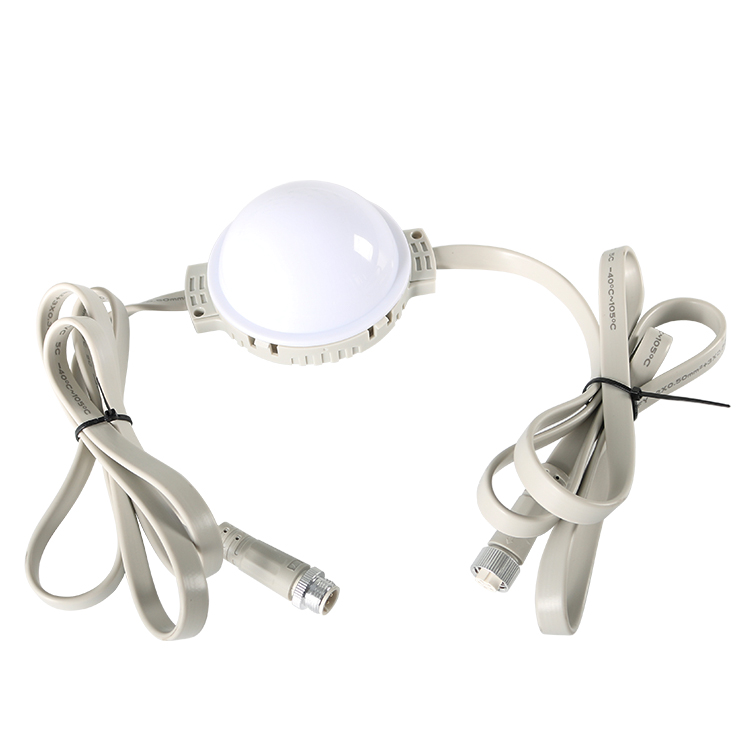
LIKELIGHT model L-C80-DMX publishes DC24V, 12 SMD3535 RGB LEDs, DMX512 addressing, 180-degree output and IP65/IP67 options.
Build one representative zone with final spacing, bracket, cable route and controller. Approve colour order, addresses, no-signal behaviour, replacement method and night appearance.
The sample release should name who records results, which controller file is used and which physical section becomes the production reference.
14 x 9 facade-grid check
126 pixels and a conditional 378 channels. One universe is possible only after mode and address confirmation; power remains pending released W/pc.
Hypothetical 14-column by 9-row grid; three channels per RGB pixel only if LIKELIGHT confirms that delivered mode.
14 x 9 facade-grid check
-
1
Confirmed detail
Hypothetical 14-column by 9-row grid; three channels per RGB pixel only if LIKELIGHT confirms that delivered mode. -
2
Confirmed detail
126 pixels and a conditional 378 channels. One universe is possible only after mode and address confirmation; power remains pending released W/pc.
Conditional selection
| Project condition | Buying action |
|---|---|
| Visible media-facade points | Use the coordinate plan and night mock-up to approve pitch. |
| Continuous wall wash | Compare a wall washer or linear product instead of dot modules. |
| Maintenance needs lift access | Design replaceable zones, accessible joints and spare addressed units before bulk order. |
View product page: How Many 80mm DMX Pixels Does a Facade Need?
This LIKELIGHT module fits a facade whose design language is a visible pixel grid, not a continuous luminous surface.
A useful quote returns exact SKU, IP option, dimensions and bracket, channel mode and address method, wiring, released W/pc, circuit schedule, controller BOM, sample acceptance, spares and lead time.
| Item | Confirmed detail |
|---|---|
| Model | L-C80-DMX |
| Format | 80 mm module; 12 SMD3535 RGB LEDs |
| Control/supply | DMX512 addressable; DC24V |
| Optical | 180-degree wide angle |
| Order options | IP65 / IP67; W/pc and channel mode to specify |
Quotation inputs
- 1Exact SKU and option matrix
- 2Dimension, wiring and control drawings
- 3Complete BOM and installed-system price
- 4Representative sample and acceptance points
- 5Spares, packing and lead time
Send the project dimensions, finished lengths, viewing distance and destination country. Ask LIKELIGHT for the exact-version BOM, representative sample and complete-system quote.
Frequently asked questions
Does 80 mm define the grid pitch?
No. It is fixture diameter; mounting, cable, structure and visual intent determine centre spacing.
Will 126 RGB pixels always use 378 channels?
Only if the delivered mode is three channels per pixel. Confirm mode and addressing in writing.
Can one universe prove the whole system is ready?
No. It only screens channel capacity; power, network topology, enclosures and maintenance zones remain.
Quotation inputs
Facade drawing: ____; rows x columns: ____; centre pitch: ____; viewing distance: ____; mounting detail: ____; destination: ____. Please return exact L-C80-DMX option, channel/address method, wiring and bracket drawings, released W/pc, controller/BOM, complete-system quote and mapped sample plan.