


Eaves Lighting Technical Guide: From Structural Design to Smart Control
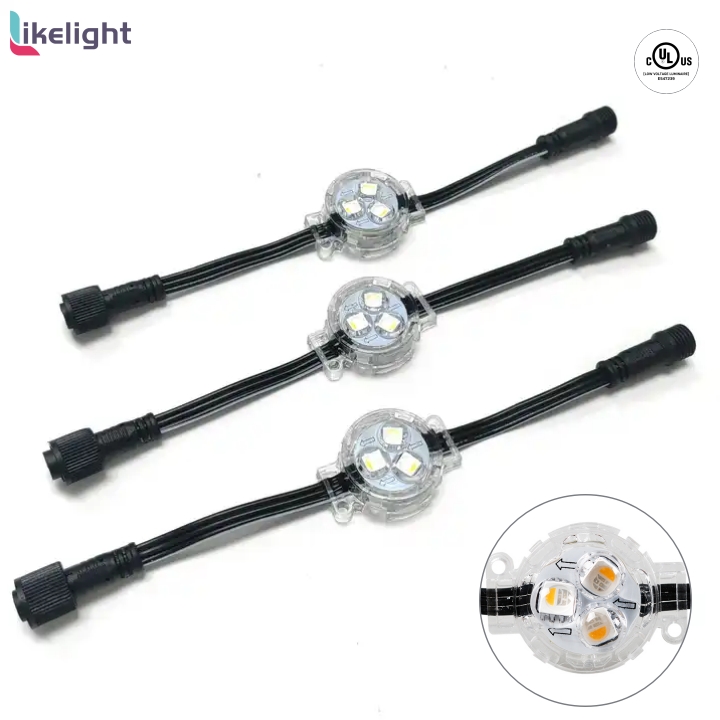

1. What Is Eaves Lighting?
Eaves lighting (also known as Under Eaves Lighting or Soffit Lighting) refers to LED lighting systems installed beneath roof eaves, soffits, or building edges. These systems are typically designed for permanent installation, serving both architectural outlining and nighttime façade enhancement.
Compared with traditional seasonal string lights, eaves lighting emphasizes:
-
Long-term outdoor durability
-
Hidden and modular installation design
-
Smart and programmable lighting control
2. System Composition of an Eaves Lighting Solution
A complete eaves lighting system usually consists of:
-
LED light modules (nodes or linear modules)
-
Mounting tracks or aluminum channels
-
Control system (controller)
-
Power supply system
-
Cables and waterproof connectors
Each component plays a critical role in the overall system stability and lifespan.
3. LED Light Source & Optical Design
3.1 LED Chip Selection
Eaves lighting commonly uses high-brightness RGB or RGBW LEDs, such as:
-
SMD5050 RGB
-
SMD3535 RGBW
Key technical considerations:
-
Strict binning control for color and brightness consistency
-
High-quality LED packaging to prevent long-term color shift
3.2 Beam Angle & Light Distribution
-
Typical beam angles range from 120° to 160°
-
Downward-facing or angled optical designs are often used to reduce glare and improve wall-washing effects
Proper optical design helps achieve balanced brightness while minimizing light pollution.
4. Mechanical Structure & Protection Design
4.1 Installation Structure
-
Clip-in or slide-in modular designs for easy installation and maintenance
-
Aluminum mounting tracks with concealed wiring for a clean architectural appearance
4.2 Waterproof & Environmental Protection
Since eaves lights operate outdoors year-round, protection design is critical:
-
Ingress protection ratings: IP65 / IP67
-
Potting processes using PU or silicone resin
-
UV-resistant housing materials to prevent yellowing, cracking, or aging
5. Electrical Design & Power Supply Strategy
5.1 Low-Voltage Power System
Most eaves lighting systems operate on DC 12V or 24V, offering:
-
Higher electrical safety
-
Suitability for residential and commercial buildings
-
Easier system expansion and maintenance
5.2 Voltage Drop & Load Calculation
For long installations, the following must be carefully managed:
-
Maximum load per power circuit
-
Cable gauge selection and voltage drop control
-
Power supply derating (recommended 80% load rule)
Proper electrical design ensures uniform brightness and long-term system stability.
6. Control Systems & Smart Lighting Technology
6.1 Control Method Options
-
SPI control (UCS / WS series ICs)
-
DMX512 control systems
-
WiFi or Bluetooth APP control
-
Cloud-based remote control and smart home integration
6.2 Pixel-Level Control & Zoning
Advanced eaves lighting systems support:
-
Individual pixel control
-
Zone-based scene management
-
One-touch switching between daily lighting and holiday effects
This flexibility allows users to customize lighting for different events, seasons, or time schedules.
7. System Stability & Reliability Considerations
From a manufacturer’s perspective, long-term reliability depends on:
-
Stable LED driver IC performance
-
Signal integrity and anti-interference design
-
Extended aging tests under full load
-
High- and low-temperature cycling tests
Strict quality control significantly reduces maintenance costs after installation.
8. Typical Applications of Eaves Lighting
-
Single-family homes and villas
-
Commercial building façades
-
Hotels, shopping malls, and office buildings
-
Holiday lighting and city beautification projects
Eaves lighting is not just a lighting product—it is an essential part of architectural design.
9. Conclusion
As demand for smart and permanent outdoor lighting continues to grow, eaves lighting systems are evolving toward modularization, intelligence, and system integration. For LED manufacturers, continuous optimization of structure, protection, electrical design, and control technology is the key to long-term competitiveness.
If you are looking for a stable, customizable, OEM/ODM-supported eaves lighting solution, understanding these technical fundamentals will help ensure project success.


