


2025-03-05
Electrode is a key part of UVC LED chip
Electrode is a key part of UVC LED chip
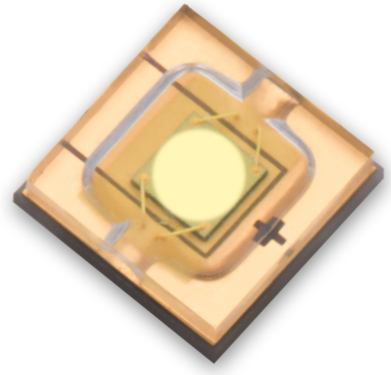
The electrode is a key part of the UVC LED chip, responsible for current transmission and luminous efficiency. The following is a detailed analysis of the UVC LED electrode:
1. The role of electrodes
- Current transmission: The external current is transmitted to the chip to drive the light.
- Electrical contact: Ensure that the chip is well connected to the external circuit, reducing resistance and energy loss.
2. Electrode material
- Gold (Au) :
Advantages: Good conductivity, strong oxidation resistance, high stability.
Disadvantages: High cost.
- Silver (Ag) :
Advantages: Excellent electrical conductivity, relatively low cost.
Disadvantages: easy oxidation, poor long-term stability.
- Aluminum (Al) :
Advantages: Low cost, easy processing.
Disadvantages: poor electrical conductivity, easy oxidation.
3. Electrode structure
- N-type electrode:
Location: Located on the N-type layer, usually the negative pole.
Material: Usually gold or silver.
Design: Good contact with N-type layer to reduce contact resistance.
- P-type electrode:
Location: Located on the P-type layer, usually positive.
Material: Usually gold or silver.
Design: Good contact with P-type layer to reduce contact resistance.
4. Electrode manufacturing process
- Lithography process:
Steps: Gluing, exposure, development, etching.
Function: Precise formation of electrode patterns.
- Evaporation process:
Steps: The metal material is steamed onto the chip surface in a vacuum environment.
Function: Form a uniform metal electrode layer.
- Electroplating process:
Steps: The metal is deposited on the surface of the chip through an electrochemical reaction.
Function: Increase electrode thickness, improve conductivity.
5. Optimization of electrode design
- Contact resistance: Reduce the contact resistance between the electrode and the semiconductor layer by optimizing the material and process.
- Current distribution: Design a reasonable electrode pattern to ensure uniform current distribution and avoid local overheating.
- Reflectivity: The electrode material needs to have high reflectivity to improve the efficiency of light extraction.
6. Electrode protection
- Passivation layer:
Material: Commonly used silicon nitride (Si₃N₄) or silicon dioxide (SiO₂).
Function: Protect the electrode, prevent oxidation and corrosion.
- Packaging material:
Material: commonly used silica gel or epoxy resin.
Function: Further protect the electrode, improve durability.
In SUMMARY:
The electrode structure of UVC LED includes N-type electrode and P-type electrode, and the material is commonly used in gold, silver or aluminum. Electrode design and manufacturing processes have an important impact on current transfer and luminescence efficiency, requiring optimization of contact resistance, current distribution and reflectivity, and protection through passivation layers and packaging materials.
The electrode structure of UVC LED includes N-type electrode and P-type electrode, and the material is commonly used in gold, silver or aluminum. Electrode design and manufacturing processes have an important impact on current transfer and luminescence efficiency, requiring optimization of contact resistance, current distribution and reflectivity, and protection through passivation layers and packaging materials.
If you are not sure which LED fixture is best for your project or need help with layout configuration, contact us LIKLEIGHT, we are a professional manufacturer of LED lamps in China;we have engineers and 24 hours customer service for you.Phone:+86-755-23328395, Email :contact@like-light.com,Wechat/WhatsApp:86-132-66666-320.


