


2025-03-26
Analysis of optical characteristics of LED
The optical characteristics of leds are one of the core advantages that distinguish them from traditional light sources

The optical characteristics of leds are one of the core advantages that distinguish them from traditional light sources, covering multiple dimensions such as light color, distribution, and intensity. The following is the system analysis of LED optical characteristics:
One. Spectral characteristics
1. 1.Spectral composition
Monochrome LED:
- It presents a narrow band spectrum, with a half-height width (FWHM) typically 20-40nm
- For example, the spectral peak of blue LED (450nm) and red LED (620nm) is sharp
White LED:
- YAG phosphor is excited by blue chip (~450nm) to produce wide spectrum yellow light (500-700nm)
- The spectrum presents a bimodal structure (blue peak + yellow continuous spectrum)
1.2. Key parameters
| argument | definition | Typical value | Influencing factor |
| Color coordinates (CIE) | The position of the light color in the chromaticity diagram | (0.33,0.33) is pure white light | Phosphor formulation/chip wavelength |
| Color temperature (CCT) | Temperature characterization of white light color | 2700K-6500K | Phosphor ratio/blue light intensity |
| Color Rendering Index (CRI) | Color Reproduction Capability (Ra) | Ordinary LED:70-85 | Spectral continuity and coverage |
| Color Tolerance (SDCM) | Color consistency index | ≤5 is qualified product | Production process control |
Two.Spatial light distribution characteristics
1. Beam Angle classification
Lambertian distribution:
- The light intensity is proportional to the Angle cosine (Iθ=I₀·cosθ).
- Typical beam Angle 120°, suitable for general lighting
Bat wing profile distribution:
- The lateral light is stronger than the central light
- Suitable for road lighting to reduce glare
Concentrating type distribution:
- Beam Angle <30°, secondary optical design
- It is used in spotlights and headlights
2. Optical design elements
- Primary optics: chip surface microstructure (e.g., flip-chip reflection cup)
- Secondary optics: External lens/reflector (PC/PMMA material)
- Tertiary optics: light guide/diffuser (for panel lights)
Three.Photometric parameter
1. Comparison of core indicators
| argument | unit | Test condition | Engineering significance |
| Luminous flux (Φ) | Lumen (lm) | Full space measurement of the integrating sphere | Total luminous capacity |
| Light intensity (I) | Candela (cd) | Specific direction measurement | Directional brightness |
| Illuminance (E) | Lux (lx) | Luminous flux per unit area of the exposed surface | Actual lighting effect |
| Brightness (L) | cd/m² | Light intensity per unit projected area | Visual brightness perception |
2. Efficiency indicators
- Radiation efficiency: conversion efficiency from electrical power to optical power (up to 80%)
- Luminous efficiency: electric power → visible luminous flux (currently commercial LED up to 200lm/W)
- System light efficiency: Overall efficiency including drive loss (typically 15-20% reduction)
Four.Temperature optical effect
1. Temperature influence mechanism
- Wavelength drift: 0.1-0.3nm/℃ (InGaN material is more sensitive)
- Luminous flux attenuation: -0.3%~-0.5%/℃ (nonlinear intensification at high temperature)
- Color coordinate offset: White LED Δu'v' can reach 0.005 at 85 ° C
2. Thermo-optical coupling model
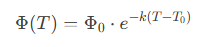
Where k is the temperature coefficient and T₀ is the reference temperature
Five.Advanced optical technology
CSP Package (Chip Scale Package)
- Stent-free design improves light extraction efficiency by 15-20%
Quantum dot technology
- Color gamut up to NTSC 110%, CRI>95
Microlens array
- Achieve accurate light distribution (e.g. ADB headlights for cars)
Six.Test method
- Distributed photometer: Measures spatial light intensity distribution
- Integrating sphere spectrometer: Obtain complete spectral data
- Near-field test system: analysis of chip-level light field distribution
Summary: LED optical characteristics key points
- Precise and controllable colors: specific spectra are achieved through material engineering
- Flexible directivity: from Lambertian body to collimation beam can be designed
- Continuous breakthrough in efficiency: from 303lm/W in the laboratory to commercialization progress
- Thermal sensitivity: Collaborative design of light and heat is required
If you are not sure which LED fixture is best for your project or need help with layout configuration, contact us LIKLEIGHT, we are a professional manufacturer of LED lamps in China;we have engineers and 24 hours customer service for you.Phone:+86-755-23328395, Email :contact@like-light.com,Wechat/WhatsApp:86-132-66666-320.


