


2025-03-19
The photoelectric characteristic of LED is one of its most core characteristics
The photoelectric characteristic of LED is one of its most core characteristics
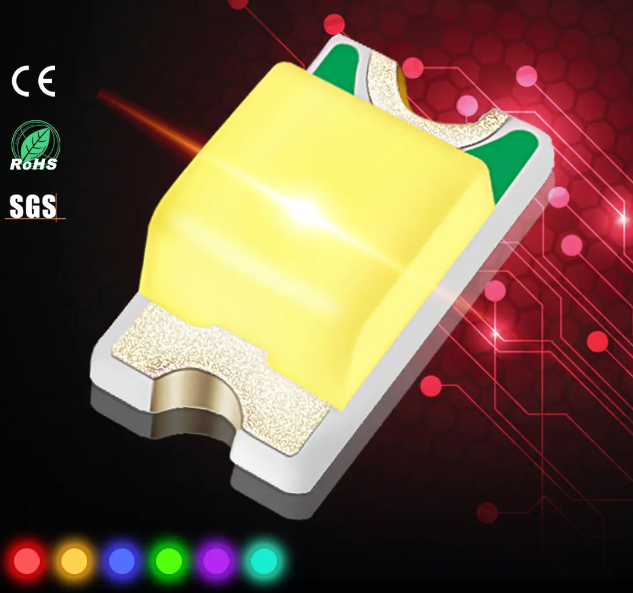
The photoelectric characteristics of LED is one of its most core characteristics, which directly determines the key performance of LED luminous efficiency, color, brightness and so on. The following is a detailed analysis of the photoelectric characteristics of LED:
1. Principle of luminescence
The luminous principle of LED is based on the photoelectric effect of semiconductor
- When the PN junction of the LED applies a forward voltage, electrons move from the N region to the P region, and holes move from the P region to the N region.
- Electrons and holes recombine near the PN junction, releasing energy.
- This energy is emitted in the form of photons, which form visible light.
2. Luminous efficiency
Luminous Efficacy:
- Light efficiency refers to the efficiency with which an LED converts electrical energy into light energy, and is measured in lumens/watts (lm/W).
- The light efficiency of modern leds can reach 100-200 lm/W, much higher than that of incandescent lamps (10-15 lm/W) and fluorescent lamps (50-100 lm/W).
- The light efficiency is affected by the following factors:
Chip materials (such as InGaN, AlInGaP).
Package design (e.g. phosphor, lens).
Drive current and temperature.
Quantum Efficiency:
- Quantum efficiency is divided into internal quantum efficiency (IQE) and external quantum efficiency (EQE).
Internal quantum efficiency: The efficiency of electron-hole recombination to produce photons.
External quantum efficiency: The efficiency with which photons are emitted from inside the LED to the outside
- The external quantum efficiency is usually lower than the internal quantum efficiency because part of the light is absorbed or reflected by the material.
3. Spectral characteristics
Spectral width:
- LED spectrum is narrow, usually 20-30 nm, high color purity.
- Compared with traditional light sources (such as incandescent lamps, fluorescent lamps), the spectrum of leds is closer to monochromatic light.
Color and wavelength:
- The color of the LED is determined by the energy gap of the semiconductor material, and different materials correspond to different wavelengths:
Red light: wavelength 620-750 nm, materials such as AlInGaP.
Green light: Wavelength 495-570 nm, materials such as InGaN.
Blue light: wavelength 450-495 nm, materials such as InGaN.
White light: through blue chip excitation of yellow phosphor, or through RGB tri-color mix.
Color temperature (CCT) :
- The color temperature of white LED is usually divided into:
Warm white light (2700K-3500K).
Neutral white light (3500K-5000K).
Cold white light (5000K-6500K).
Neutral white light (3500K-5000K).
Cold white light (5000K-6500K).


