

Architectural Linear LED Lighting with a 330-Degree RGBW Profile: When Does It Fit?
A linear profile can disappear into architecture or become an unwanted bright object. The difference is often not the RGBW colour capability but where the 330-degree emission is allowed to travel, what surfaces reflect it, and where viewers can see the source.
This article turns the four published facts for LIKELIGHT model L-RD-2020 into a practical decision method. It also keeps the missing values visible: rated power, profile dimensions, pixel grouping and protection are not published in the current structured evidence.
Published product facts
| Published item | Value |
|---|---|
| Model | L-RD-2020 |
| Light colour system | RGBW |
| Input | DC24V |
| Control IC | UCS2904 |
| Beam angle | 330 degrees |
| Not published | Power, dimensions, protection and pixel grouping |
Start with the surfaces that should receive light
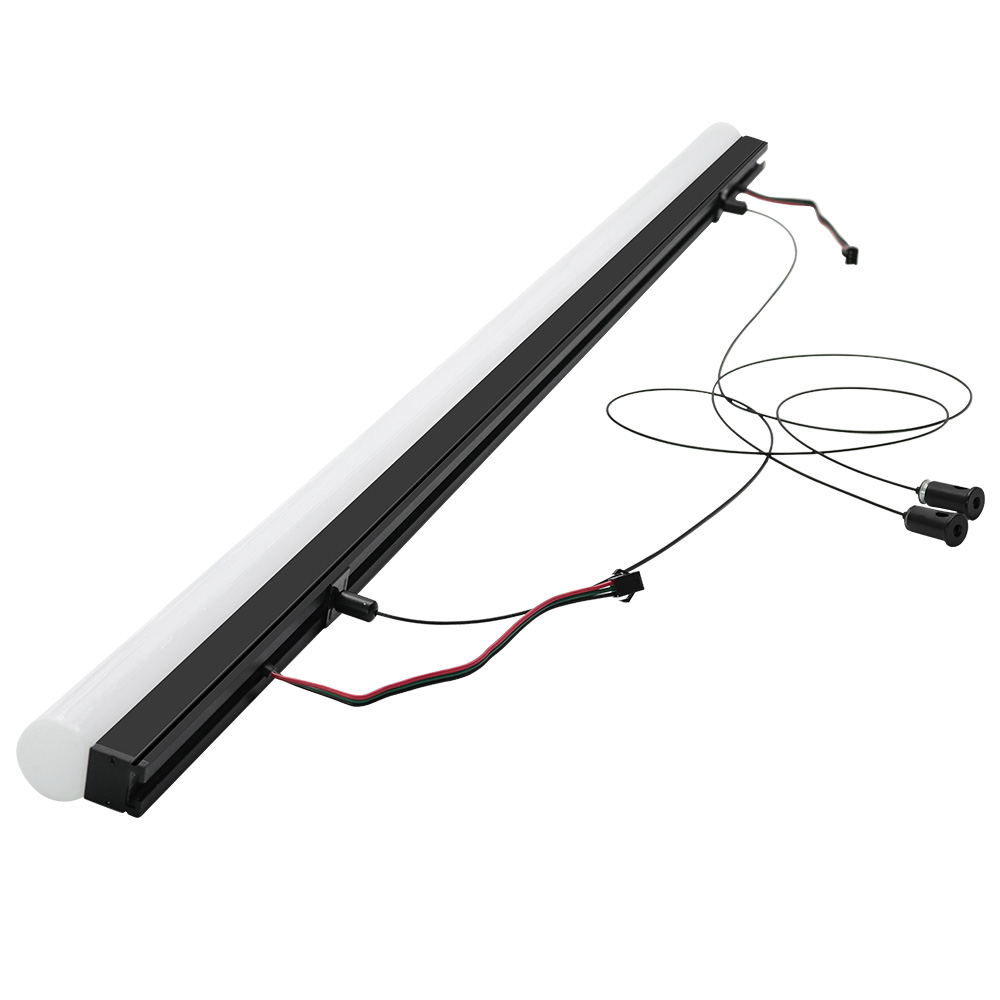
A 330-degree beam is close to wraparound distribution but is not a full 360-degree claim. It can illuminate several adjacent surfaces around a recess or profile, yet it can also spill toward glass, polished metal or the normal viewing direction.
Draw the intended lit surfaces in section view. If the design needs light on only one narrow plane, a more directional optic may be easier to control; this profile is not the first choice when exposed-source glare cannot be screened.
Use RGBW for colour plus a dedicated white decision
RGBW provides a separate white channel in addition to RGB mixing. That can support a project that alternates between decorative colour and a white architectural scene, but the required white appearance still depends on the released LED configuration and control file.
Approve at least one colour scene, one white scene and one transition on the actual material. A wall paint sample and a metal finish can render the same programmed values differently.
Plan DC24V without inventing the current
DC24V is published, but rated power and current are not. The supply size, cable gauge and injection points therefore cannot be calculated from the current page. A voltage value alone does not define the electrical load.
Measure a released sample at the brightest intended RGBW scene. Use that result with total length, cable resistance and connector count to divide the installation into serviceable supply zones, then record loaded voltage at the far point of each zone.
Project selection table
| Project condition | Decision direction | Why |
|---|---|---|
| Several adjacent surfaces | Evaluate 330-degree emission | The profile can spread light around a recess. |
| One narrow plane | Compare a directional optic | Broad emission can create spill. |
| Close-view exposed source | Add shielding or re-evaluate | Source brightness may enter the sightline. |
| RGB plus white scenes | Approve both modes on material | Surface colour changes the result. |
| DC24V distribution | Measure sample current | Power is not published. |
| DMX or Art-Net system | Specify the conversion controller | UCS2904 is the downstream cascade data. |
Treat UCS2904 as cascade-pixel data
UCS2904 identifies a cascade-pixel architecture. Plan pixel count, grouping, data direction, controller-port allocation, colour-channel order and content mapping rather than assuming that each section receives a manually entered DMX address.
If the project uses DMX or Art-Net at system level, document the controller that converts those channels to UCS2904 data. Commission a short numbered zone before releasing the full show file.
Freeze the missing mechanical boundaries
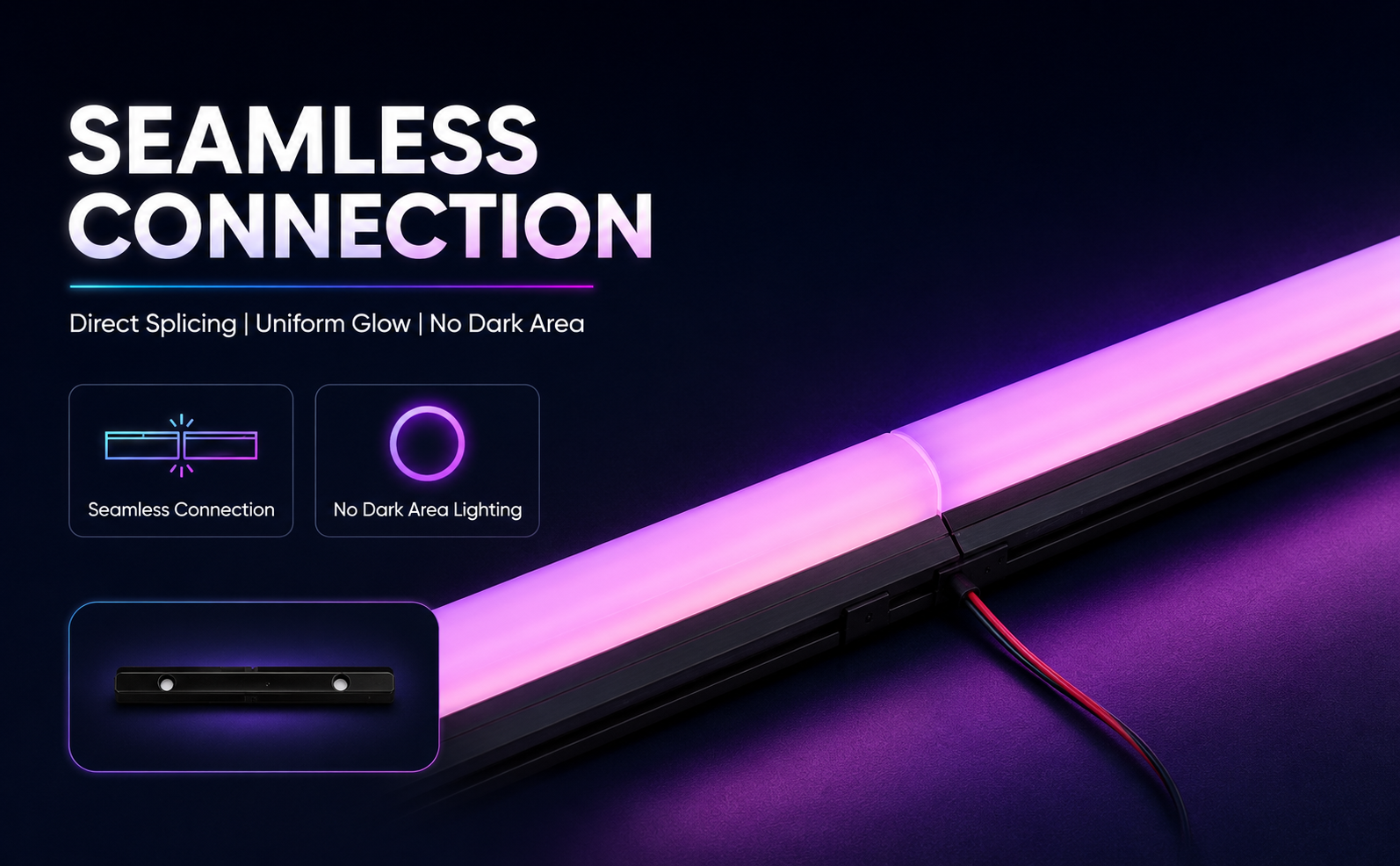
The current structured evidence does not publish profile dimensions, mounting clips, bend capability, maximum continuous length or protection grade. Those omissions matter because a 330-degree source can be blocked by the wrong bracket or expose the viewer to an unshielded bright edge.
Approve a section drawing showing profile orientation, support points, cable exit, diffuser or shielding, expansion space and service removal. Do not copy a mounting detail from another linear-light model.
Where the LIKELIGHT L-RD-2020 fits
The published combination is model L-RD-2020, DC24V, UCS2904, RGBW and a 330-degree beam. It can be evaluated for coves, reveals, contour details and custom architectural elements that benefit from broad surrounding emission and programmable colour-plus-white scenes.
It is not a priority fit for a narrow one-plane accent, an exposed source in a close-view area, or a project that requires verified outdoor protection and electrical loading before a sample is available. LIKELIGHT can use the released drawing and sample to freeze those boundaries.
Suitable when
- Coves and reveals needing broad surrounding emission
- Projects using programmed RGBW scenes
- Installations able to approve orientation and sample current
Re-evaluate when
- Narrow beam control without spill
- Close-view exposed source without shielding
- Outdoor approval based on an unpublished protection grade
What to provide for an architectural sample
Send a section drawing, lit surfaces, closest viewing position, material and finish, required RGBW scenes, total and zone lengths, controller platform, DC24V supply location, cable route, mounting access, environment, quantity and project schedule.
These inputs allow optical direction, source visibility, pixel mapping and supply measurement to be reviewed together. The sample should return an approved orientation drawing, control file and measured electrical record rather than only a colour video.
- Section and mounting drawing
- Lit surfaces and viewing position
- Material and RGBW scenes
- Total and zone lengths
- Controller and DC24V supply
- Environment, access, quantity and schedule
Frequently asked questions
Is 330 degrees the same as 360 degrees?
No. Use the published 330-degree value and test the actual orientation.
Can the power supply be selected from DC24V alone?
No. Rated power or measured current is also required.
Does UCS2904 mean direct DMX control?
No. A system-level controller may convert DMX or Art-Net to cascade data.
Is the profile suitable outdoors?
The current structured evidence does not publish a protection grade, so outdoor suitability needs a confirmed configuration.